Hi everyone,
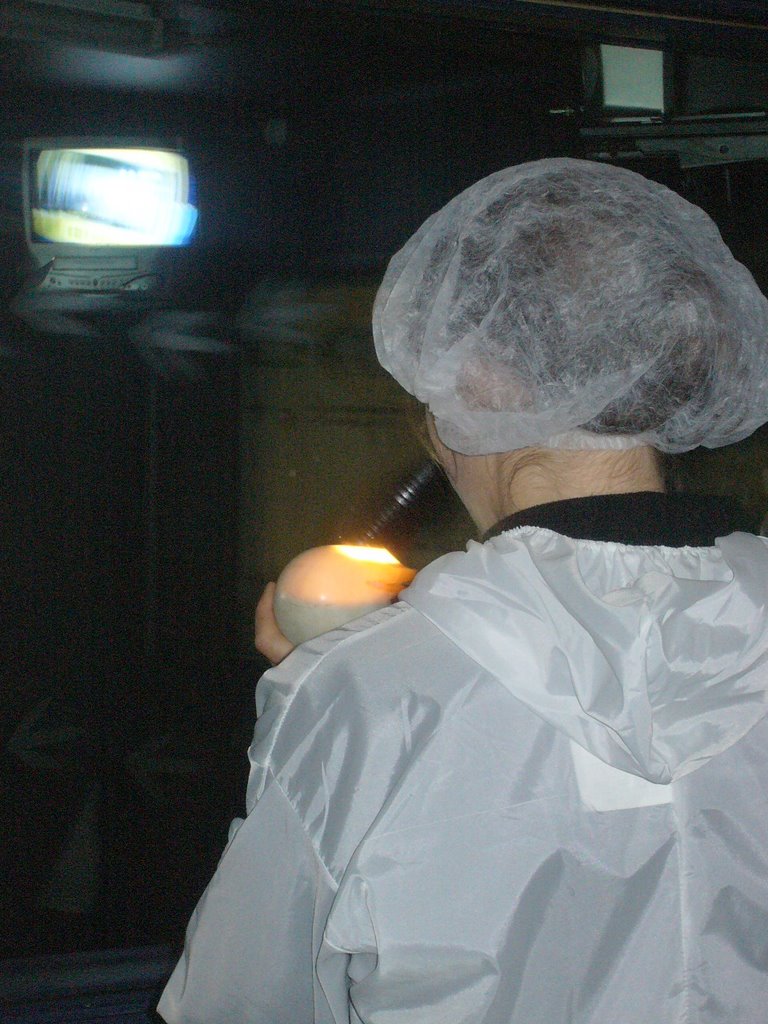
We are coming to the end of the breeding season here at the Okarito Sanctuary. It's been a successful year with 21 chicks hatched, and 4 eggs awaiting hatch.
Earlier this month we brought 8 of last years chicks back from Motuara Island to return to the Okarito Sanctuary. Do you remember where Motuara Island is?
All the birds we returned are over a year old and weigh more than 1.4kg. Once a Rowi weighs over 1.2kg it can defend itself against stoats.
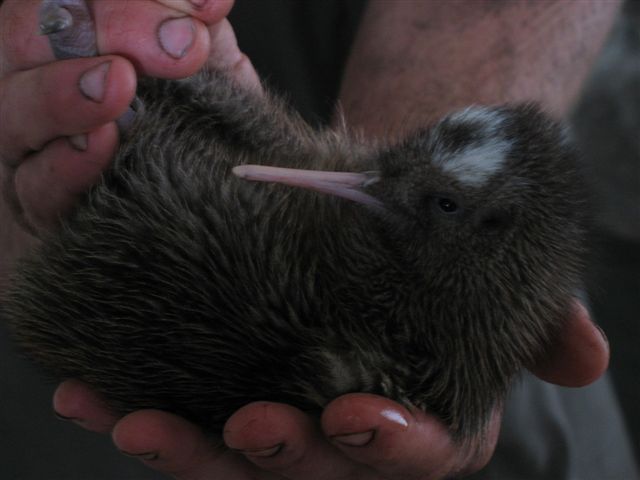
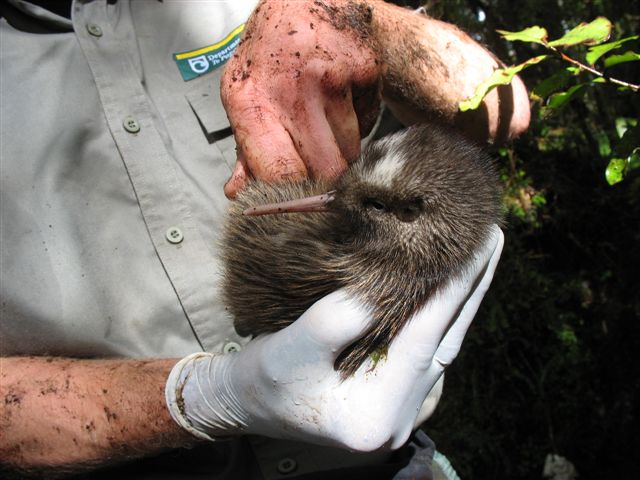
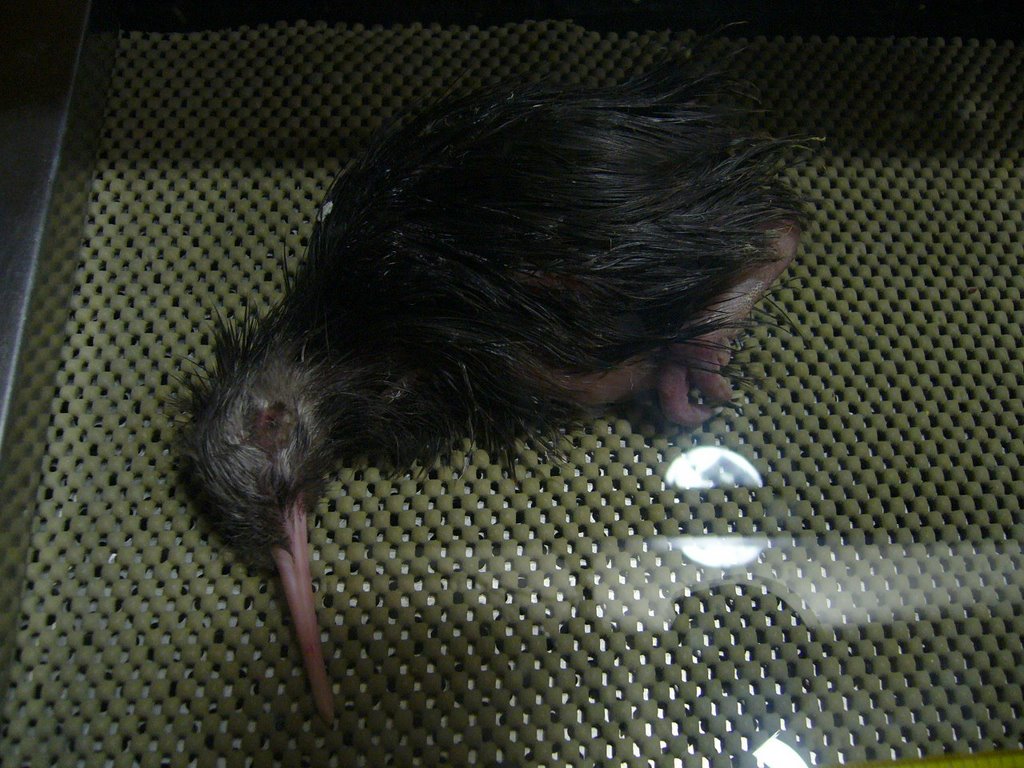
Here is one of the rowi settling into his new home at Okarito. He doesn't have a name yet, can anyone think of a name for him?
We will be bringing 4 more Rowi (including Okka) back to Okarito at the end of February. We will be coming through Whataroa so keep your eyes and ears open for more details if you live there.
Friday, February 01, 2008
Return to the Sanctuary
Tuesday, November 13, 2007
Richard Kinsey to the rescue answering some (not too hairy) questions for you...
Hi there kiwi team
Here I am from Japan enjoying another feast.
On Saturday I gave a talk to the Kanagawa Goodwill Guides about my year with the kiwi team. Can someone from the kiwi team answer these questions for them please?
1. How long is a kiwi's life time?
Hi Julie and everyone in sunny Japan.1.We are not sure how long the kiwis can live for but there are some birds that we know from the first time we started monitoring which was a long time ago. I think one bird we know is at least 35 years old. He is called Colin and is blind and a bit scrawney but still happy!!!
2. What age do rowi become sexual mature? (Reproduction)
Kiwis can become mature as young as 2 but it usually takes a little bit longer before they are confident enough to have a teritory and a female to mate with. I think the average would be about 4-5.
This year we have a male rowi called Nemo who is only 3 and has fathered 2 eggs already! Both eggs have successfully hatched into healthy chicks, can you remember the name of the first chick hatched this season?
3. How many kiwi are you monitoring now?
I think that the kiwi team are monitoring quite a lot of birds this year but someone else might know exactly. I would say about 60-80.
That's right Richard, we are monitoring 74 birds this season, and hope to monitor 100 next season!
4. Any further updates?
I haven't been working for the kiwi team for a while now and chase dolphins and animals in the sea instead. I think that the season is going well though and there are some new additions to the list. Hope you are all enjoying Julies teaching, good to hear that kiwi birds are visiting Japan.
Stay tuned for the next post..
From Ranger Richard Kinsey DOC Te Anau
and Liz Brown from the Rowi team
Friday, November 02, 2007
Happenings in the Rowi Sanctuary
Hi everyone,
The rowi team here in Franz Josef are very excited. We already have 8 chicks and 9 eggs waiting to hatch at Willowbank. There are another 8 eggs still out in the forest to collect when they reach 30 days. When all the eggs at Willowbank hatch, we will have the same number of chicks we got last year.. and it's only half way through breeding season!
Questions for the kiwi workers from Ms Julies class in Japan
Aya asked: When you catch the stoats do you kill them?
Jo answered:
The stoat trap is like a big mouse trap that kills the stoat immediately.
It is put in the wooden tunnel to stop other animals and birds from being caught.
Stoats like narrow tunnels and are thin enough to squeeze into the tunnels narrow entrance. There is bait like an egg or piece of rabbit meat to attract the stoat into the tunnel.
Aya and Ms Julie replied: Thanks Jo and Liz for your updates, that was very exciting news! Do you have any more photos of stoats to post?
This week in class we wrote letters to conservation organisations here in Japan asking them how can we help?
Wednesday, October 17, 2007
Kiwi update
Hi everyone. This is an x ray of a kiwi with something inside, can you see what it is? Post your reply
This season is now in full swing. We have transmitters on 54 pairs, which are keeping staff happy monitoring nests. Already we have 7 eggs and 6 chicks at willowbank with another 15 in the forest - and this is expecting to increase.
14 chicks from last season are currently still on Motuara Island, happily gaining weight. Unfortunately one was found dead, we aren't sure why.
The Kiwi Team
There are a few staff changes - Duncan and Liz are still working hard - Liz has taken over Abbies role looking after the incubation room, as Abbie has headed to the bright lights of Wellington.
Ian moved from the Visitor Assets team to the Kiwi team early this year and Josh who was a trainee ranger now has a full time role. Jo who used to work for the kiwi team has come back for a two year stint, also helping Myles with weed work.
Tuesday, February 27, 2007
More news from Motuara Island
Four more chicks were taken to Motuara Island last week, with just one remaining at Willowbank. This just had his transmitter attached.
We had a few concerns on this trip. We needed to check the chicks that had been released from previous visits to ensure that they are OK. We found seven together in one penguin burrow, but four were missing! We ran around trying to find the transmitter signal but no luck. The next day we got faint signals from two of the chicks but Okka and one other were still missing. We were worried that the transmitters had failed. As the boat was leaving we asked the skipper to take us around the island so we could try one more time .... and yes, we got strong signals for them both. Phew!
Motuara Island is not just special as as a kiwi creche; robins and saddleback have also been reintroduced there. Other birds we saw on our trip were falcon, tui, bellbird, fantail, sooty shearwater and pied shag.
Bellbird having a bath
Juvenile saddleback at the hut. Do you know what an adult saddleback looks like?
Robin checking out the kiwi boxThursday, January 11, 2007
Okka goes North
After Okka came to visit you all, Duncan drove him to Willowbank. He stayed for one month before flying (on an aeroplane) to Blenheim then over to Motuara Island with Abbie and Liz.
Liz released him into a wooden roost box, after attaching a transmitter. Abbie will be checking him next week and we let you know how he is getting on.
Friday, December 08, 2006
Taking the chicks to their temporary island home
This is Abbie with one of the chicks she took up to Motuara Island last week.
The chicks were flown from Willowbank in Christchurch to Blenheim in an aeroplane (who said kiwi can't fly!). Then Abbie and Liz drove them to Picton, and after that they boated across to the island - whew!
Liz will keep you updated with their progress. Watch this space.
Thursday, November 30, 2006
Tuesday, November 21, 2006
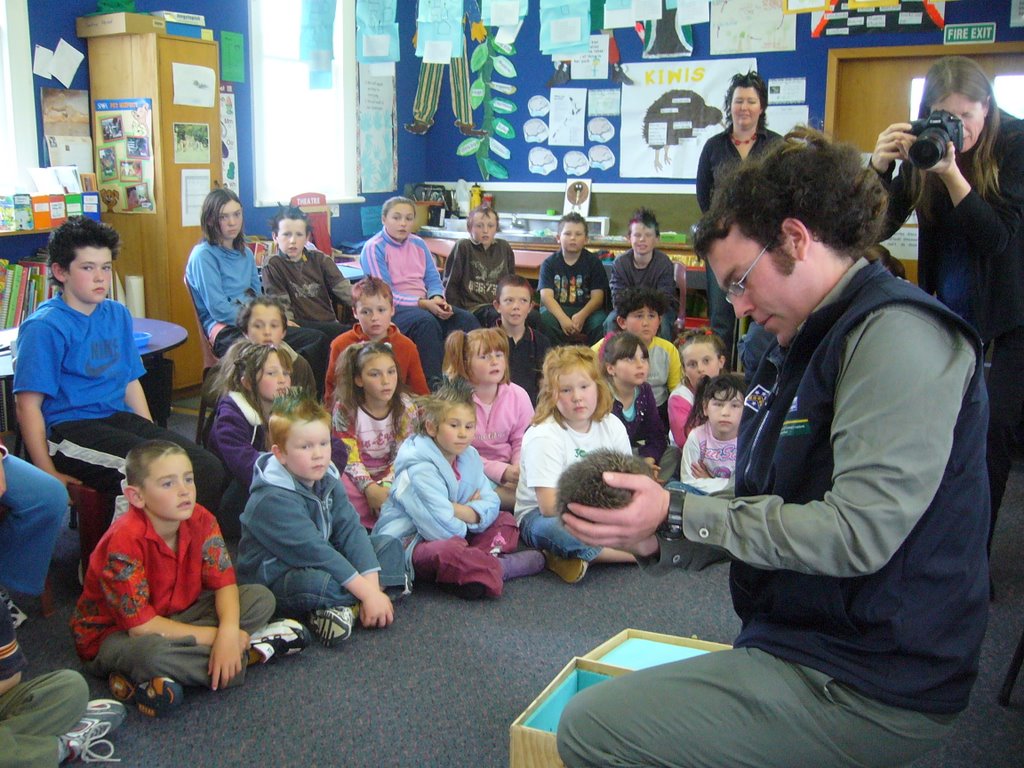
Rowi chick visits school!
Dunc's and I enjoyed bringing the chick to school to show you. You were all so quiet. This is really important so we do not frighten the chick.
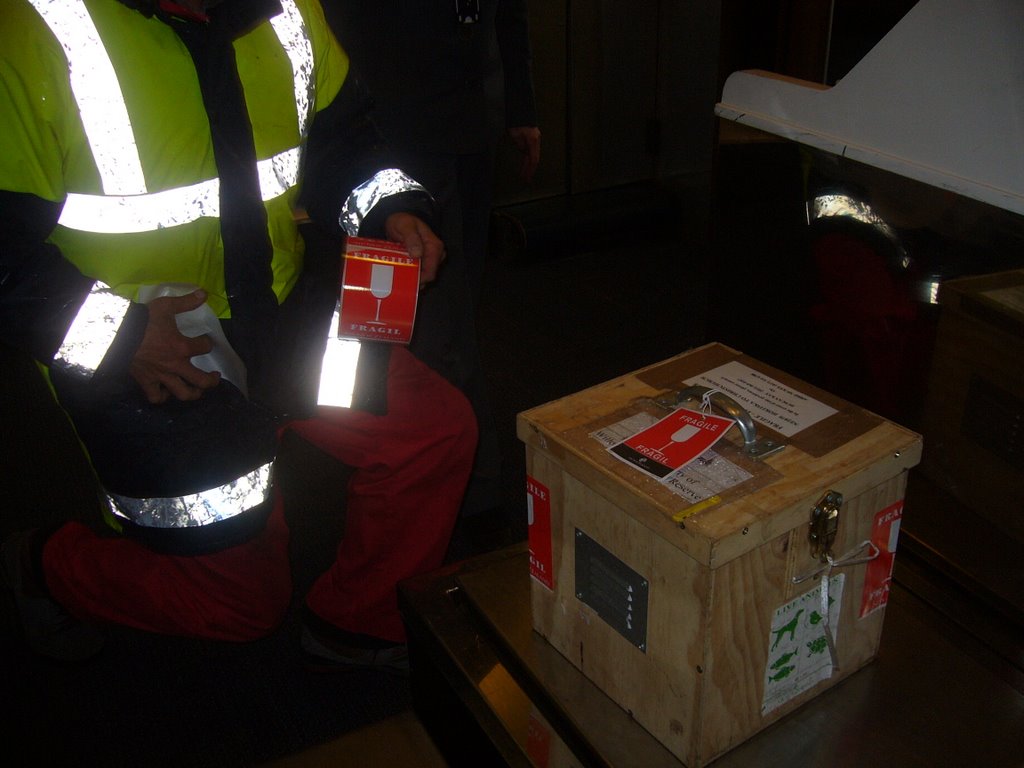
When we got to the airport the rowi chick was weighed again in it's box. Can you see the stickers that the airport staff put on the box. What do the stickers say ?
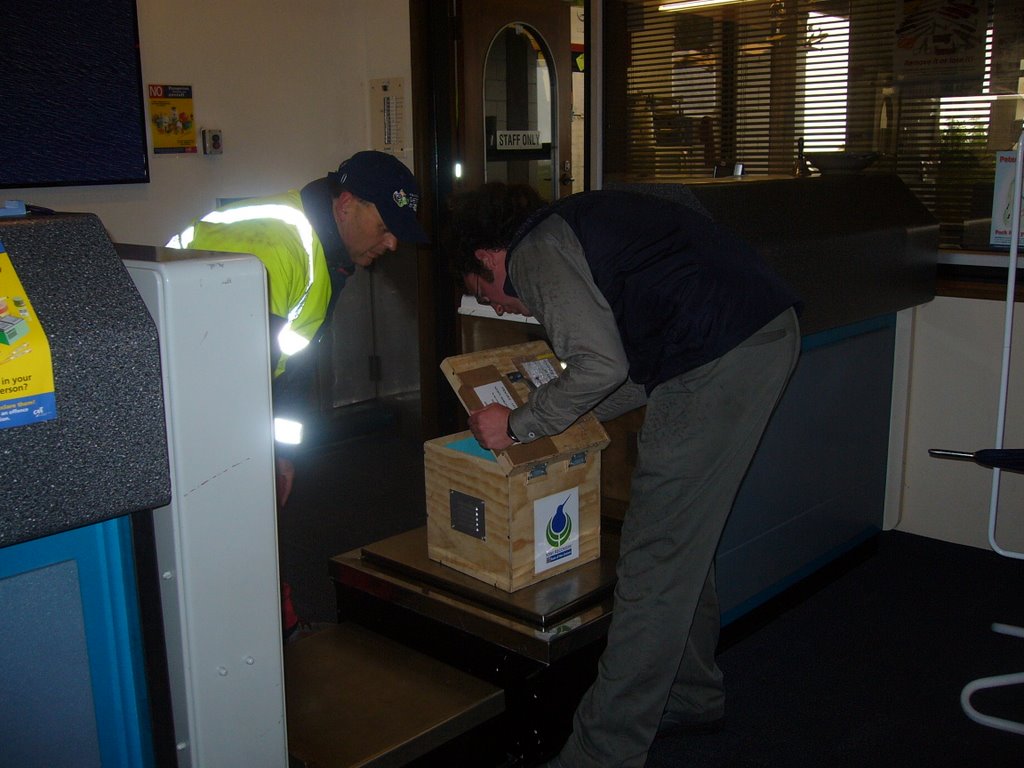
Dunc's is weighing the rowi chick carefully. Do you remember how heavy it was?
Friday, November 03, 2006
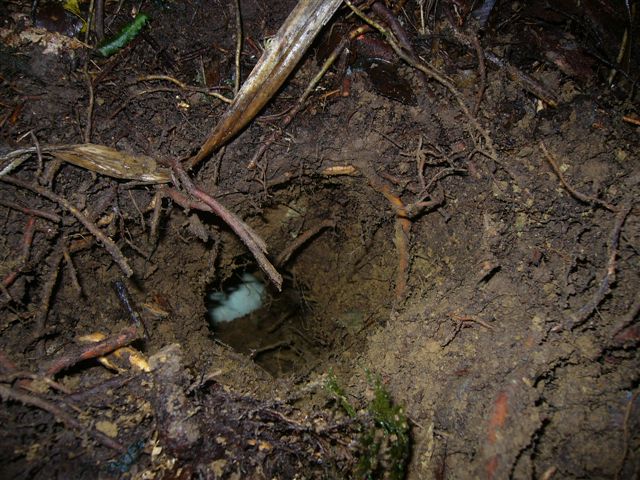
Can you see the egg in the burrow?
After we lift out an egg, we place a cross on top of it with a pencil. It must sit in the carrier the same way it did in the burrow. Can you guess why?
Lifting an egg
Here is Warren the kiwi worker.


Sometimes the egg can be found in a deep burrow, in the trunk of a big tree.
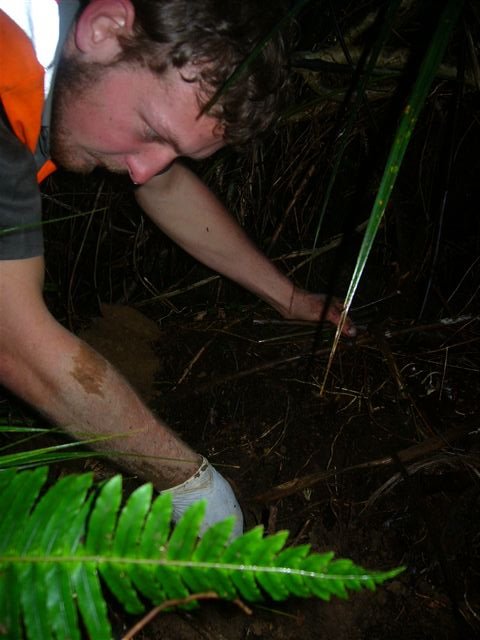
For this egg we had to track exactly where the kiwi was sitting, then dig a hatch to get it out.
Look at Warrens face. How do you think he is feeling?
Monday, October 16, 2006
A successful chick rescue from Okarito Forest


What an amazing day we have had! First we took the chick out of the burrow, put it into the bucket and took it back to base. Walking, then in the boat and in the car. Abby was at base to meet us and she made sure the brooder was ready.
Next the chick will go straight to Motuara Island.
Why do you think we took a chick, not the egg this time?
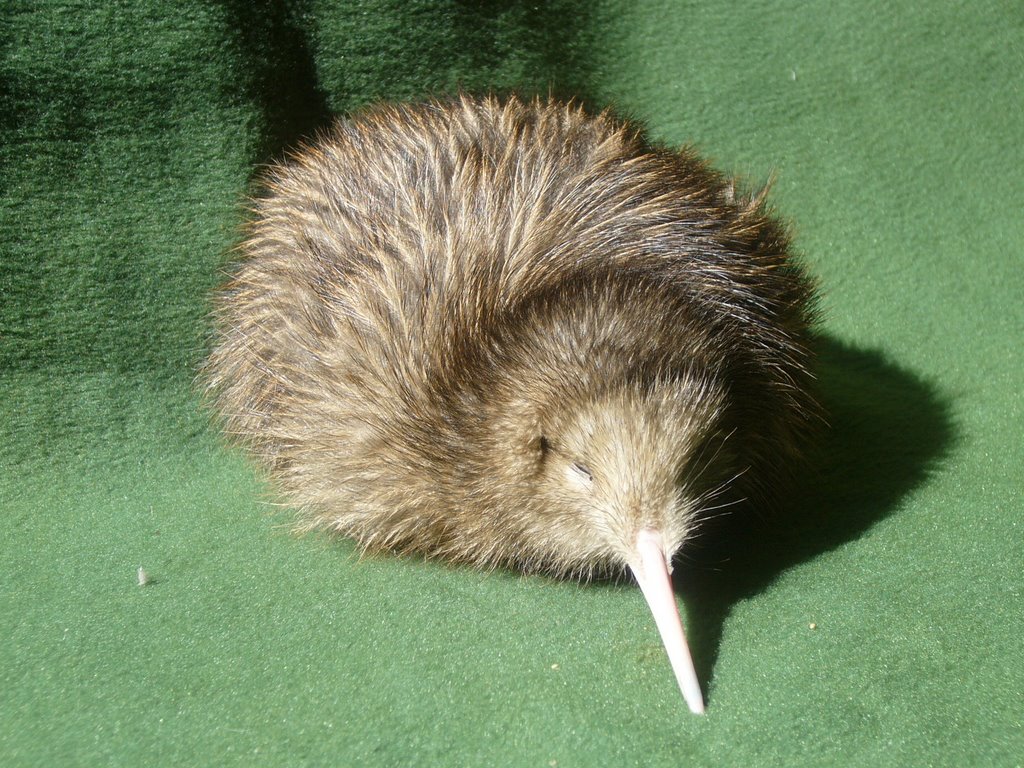
The difference between north island brown and rowi


Can you see differences between the chicks?
There are two brown kiwi and one rowi. Can you tell which ones they are?
Claire is the Kiwi Husbandry Manager at Kiwi Encounter
After candling the egg Claire measures it. What do you think she is writing down about this egg?
Kiwi hatching at Kiwi Encounter - the kiwi chick successfully hatches!
After hatching the chick stays in the incubator for 48 hours. 
It dries off and learns to stand up.
After that it will be put into a brooder.
Sunday, October 08, 2006
Kiwi hatching at Kiwi Encounter
I couldn't believe my eyes when I saw this chick pipping out of it's shell! Can you estimate how old this chick is?
Kiwi Encounter in Rotorua candling the eggs
Thursday, August 31, 2006
Duncs setting up a datalogger

Dunc's went to university after school. He wears amazing long dreadlocks! He is the kiwi team leader.
Dunc's is setting up a datalogger not far from a kiwi burrow.
Can you spot Bruce?
Monday, August 28, 2006
What is a datalogger?


Dataloggers listen to kiwi transmitters and record kiwi movements. Why do you think kiwi workers need to know this?
Sunday, August 20, 2006
Wash and weigh the rowi egg

Here is Amy. Amy will take care of our the rowi eggs. This is the incubator at Willowbank.
Can you guess how long it might take for a rowi egg to hatch?
Hey this rowi egg is heading to Willowbank!
Amy and Mat work at Willowbank. I was lucky to go with them from Franz Base to Willowbank in the car.
We carefully looked after the eggs.
Willowbank is a great place to see a kiwi. I saw two kiwi foraging for worms with its bill.
After a night at Franz Josef
The eggs had a night in the Franz incubators. Would they be kept warm or cold? Why?
After that the eggs went back in the carrier and into the car.
What a long journey
Can you remember where they travel to? from Franz they go to--------
then to-----------and last of all--------!
Wednesday, August 09, 2006
Abby is the expert on holding the eggs before they goes to Willowbank
Abby looks after the eggs while they are waiting in the incubator to go to Willowbank.
She washes and weighs the eggs.
Why do you think she is wearing gloves?
In the helicopter taking the eggs to Franz base
Here we are, hanging onto the egg carriers very carefully!

The helicopter was the safest way to get back to Franz Base. Why do you think that was?
This was the fantastic birds eye view from the helicopter down the Waiau River.
The first rowi egg to go to willowbank!

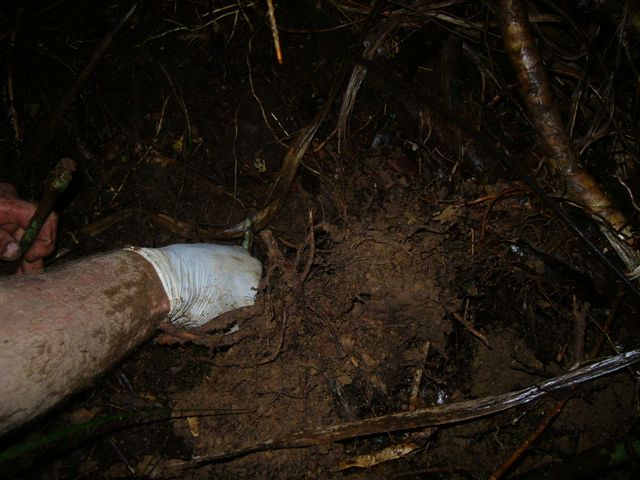
We reached in the burrow to get the egg out.
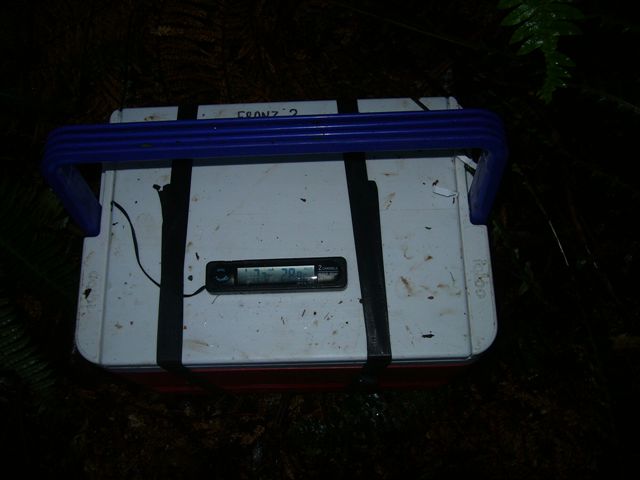
Then we put it in the chilli bin with a hot water bottle inside to keep it warm.
After that we walked to the helicopter carefully
to catch the helicopter back to Franz Base.
Saturday, July 29, 2006
Liz kiwi worker
After Liz went to school she studied at Otago University.
She has worked with scientists on truffles (they are like mushrooms) and has been catching stoats to study their movements.
Now she works with the rowi team.
Tuesday, July 25, 2006
Operation Nest Egg
When they are 1 kg they can look after themselves and they are put back into the Okarito Kiwi Sanctuary.
Monday, July 24, 2006
Kiwi display, kiwi tracks in the sand, skull of a kiwi


On holiday in Stewart Island I found kiwi tracks in the sand, magic! There are lots of kiwi there.
In Invercargill at the museum there was this beautiful display of kiwi and a this skull of a kiwi beak.
Can you draw what you think a kiwi print would look like on paper.
Wednesday, June 07, 2006
Tena korua Jo and Wendy


What were the important ideas Jo and Wendy talked about? What do you know about stoats?
They really enjoyed meeting you and said you have lovely manners!
Monday, June 05, 2006
The Kiwi Team at Franz Josef Waiau DOC

Rangers tag kiwi so they can trace their whereabouts in the Okarito Sanctuary.
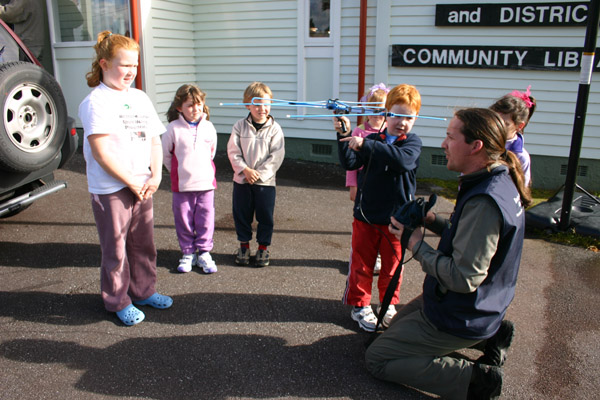
Sometimes they attach radio transmitters so they can track kiwi to learn about how they live.
Here is the kiwi team I work with.
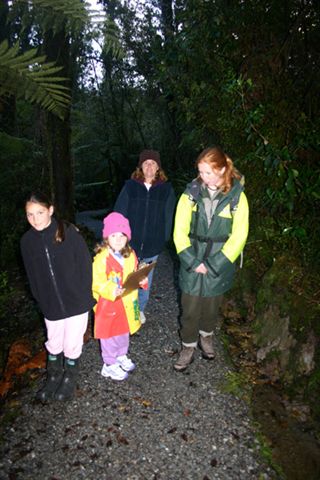
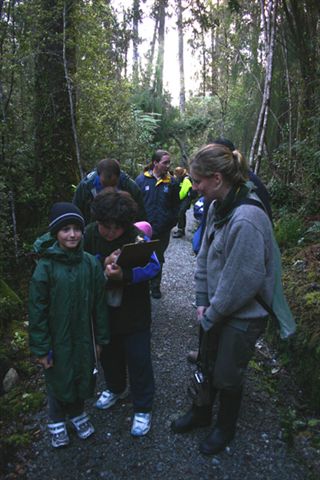
You will be meeting the kiwi team because they want to visit to show you about tracking kiwi.
Saturday, May 20, 2006
The next day I took out the paper and put in new ones. I changed the bait to rabbit meat to attract stoats.
After three nights the paper is taken out.
When we look at the paper what do you think we find?

Today we are rodent monitoring.
We can estimate the numbers of rats and stoats in an area by using tracking tunnels.
Rats and stoats love to run through these tunnels especially if there is food in them.
Here I am setting up the tracking tunnel.
The pink pad in the middle has ink and there is
cardboard either end.
The rat walks through the tunnel and leaves it's footprints on the cardboard.
Peanut butter is spread on the entrance of the tunnel to attract the rats.
Friday, May 19, 2006
Hi there everyone in Room 1. 
I enjoyed reading all your comments on the blog.
Since I last saw you I've been camping. I used all of the things that you found in my pack. The job I had to do when I went on this trip was rodent monitoring.
Sunday, May 14, 2006
Kia ora Room 1 school students!


I loved coming to meet you. Do you remember all the things I had in my pack that I take into the bush? Now my new friend Bruce joins me in my work, look he's showing me which track to take!


What an amazing day at work!
Can you guess what we are doing with the kiwis?
Write some comments telling what you think is happening.

Mr Seff can follow the scent of a kiwi to where they are, instead of having to try to find them by radio tracking and looking in all of the places they could be.
She is also useful at finding birds whose radio transmitters have fallen off. Mr Seff is also good at helping John to find new kiwis.
Mr Seff would never try to hurt a kiwi (she likes sniffing them out and being praised too much!) but just in case she always wears a muzzle over her mouth when she is working.

This is John with a kiwi. Mr Seff found it's burrow then waited patiently outside the burrow until we got there.
Monday, April 24, 2006
Saturday, April 08, 2006
One day when we were out doing our kiwi work we caught sight of this bird.
Do you know what kind of bird it is? I'll give you a clue, towit towoo.
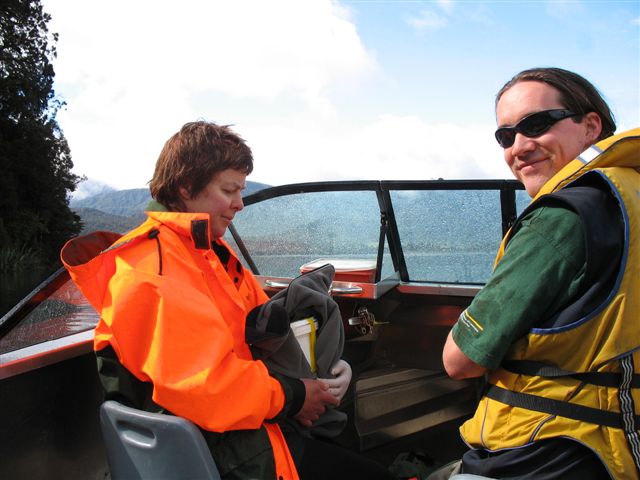
This is how we got to work in the kiwi sanctuary today.
To drive the boat you have to have a boatmasters certificate.
Anyone who rides in a boat has to wear a life jacket.
Why do you think Chrissy and I are wearing safety vests in the bush in the photo below?


Chrissy made me find this kiwi all by myself!
I'll tell you more about that later.......
The kiwi had to come out of it's burrow even though it was asleep.
The kiwi team only do this once a year to change it's transmitter.
I bet you don't know what an animal that is awake all night is called?
Monday, April 03, 2006

In this photo Chris and Paul are holding a kiwi making a transmitter change. After we had finished we needed the compass to find our way out of the thick bush.